
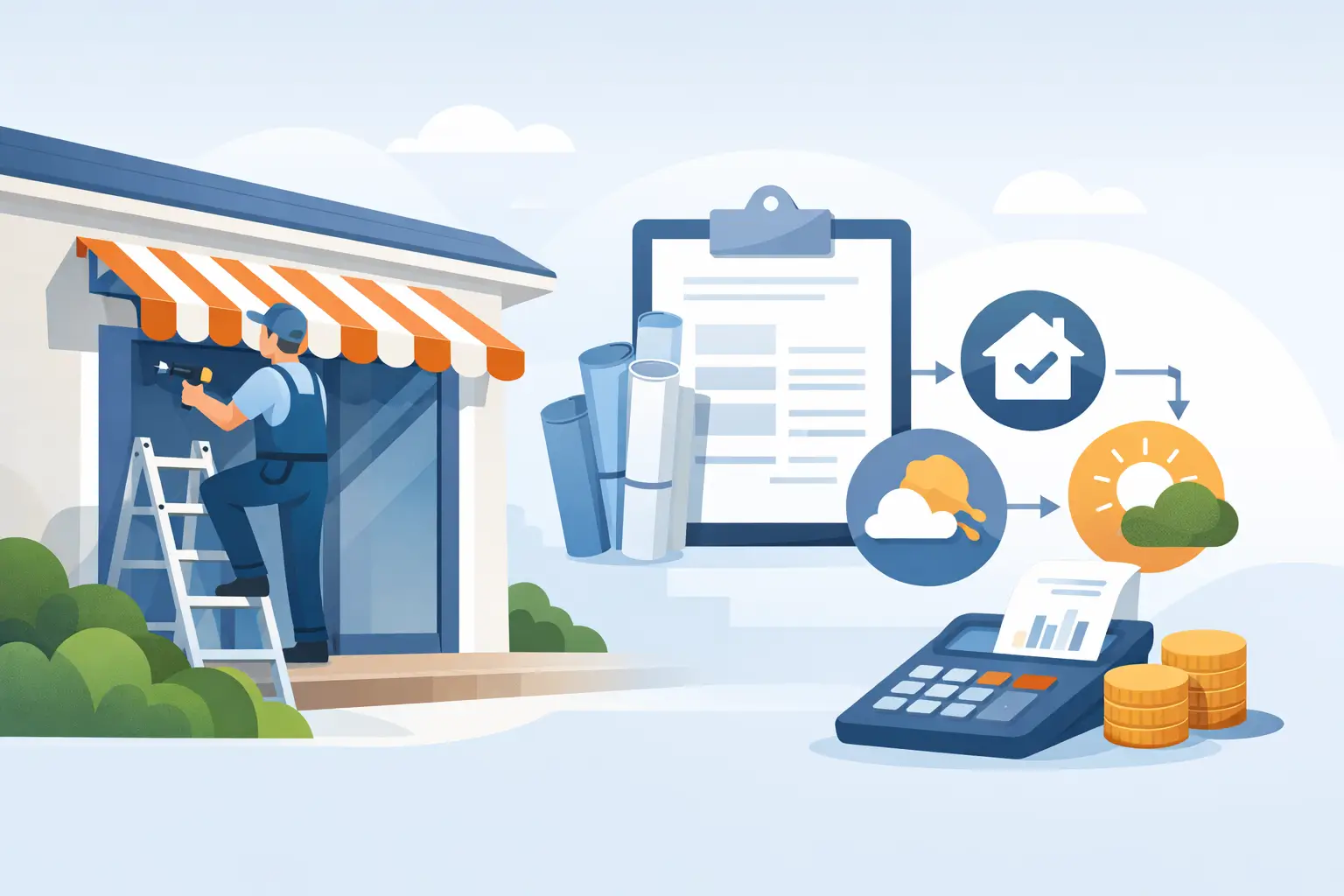
If you are pricing shade for a patio, storefront, or entryway, awning installation cost usually comes down to a simple question: what are you trying to protect, and how long do you want that protection to last? A small fixed awning over a door will land in a very different price range than a large custom canopy built to handle heavy sun, frequent rain, and daily commercial use.
That is why broad online price estimates can be misleading. Two awnings may look similar in photos, but the frame strength, sheet thickness, finishing, drainage design, and installation difficulty can change the final number fast. For property owners, the better approach is to understand what drives cost so you can compare quotes with confidence.
What drives awning installation cost
The biggest factor is size. Larger awnings need more material, more structural support, and more labor. A compact residential window awning is a lighter job than a wide car porch cover, restaurant frontage awning, or extended walkway canopy.
Material choice also has a major impact. Polycarbonate is a popular option because it balances weather protection, light transmission, and practical pricing. Glass gives a clean premium look, but it usually costs more because the material is heavier, more delicate to handle, and often requires a stronger support system. Metal deck and ACP awnings can offer a more solid appearance and strong durability, but the exact price depends on the thickness, design, and finishing details.
Installation conditions matter just as much as the awning itself. A straightforward wall-mounted installation on an accessible ground-floor facade is usually more affordable than work on upper levels, uneven surfaces, or areas with limited access. If the installer needs extra reinforcement, special brackets, or custom steel fabrication, the cost rises for good reason.
Typical price ranges by awning type
Awning installation cost is often quoted by project rather than by a single universal rate. That is because contractors are pricing a complete system, not just a sheet and a frame. Even so, it helps to think in ranges based on category.
Basic fixed awnings for doors or small windows usually sit at the lower end of the budget. These projects use less material and are faster to install. Mid-range residential awnings for patios, side yards, balconies, or porch areas cost more because they cover a larger span and need stronger support.
Custom commercial awnings tend to cost the most. Storefronts, loading areas, outdoor dining spaces, and branded entry canopies often require larger dimensions, cleaner finishing, and tighter installation tolerances. In these cases, appearance matters almost as much as weather protection, so the details affect pricing.
As a practical guide, many property owners find that small simple installations may start in the lower hundreds, while larger custom-built awning systems can run into the thousands. The gap is wide because the scope is wide. A quote only makes sense when it matches the actual site and intended use.
How materials change the final price
Polycarbonate awnings
Polycarbonate is often chosen for its value. It offers good protection from sun and rain while still allowing light through, which helps spaces feel open instead of boxed in. Awning installation cost for polycarbonate systems can stay relatively manageable, but the final price still depends on sheet grade, UV protection, frame type, and how much structural support is needed.
Glass awnings
Glass is usually a premium choice. It delivers a modern, polished look that works well on upscale homes, offices, and storefronts. The higher cost comes from the material itself, the handling requirements, and the support hardware needed to keep the installation secure and long-lasting.
Metal deck and ACP awnings
These options are often selected when customers want a more solid roof feel and stronger heat or rain coverage. They can be excellent for porches, car spaces, walkways, and commercial frontages. Pricing varies based on panel thickness, framing, insulation options, and visible finishing.
PU panel ceiling awnings
PU panel systems are often chosen for better heat control and a cleaner underside appearance. They may cost more than simpler sheet systems, but many owners see value in the improved comfort and finished look, especially in outdoor areas used every day.
Labor is not a small part of the bill
A common mistake is assuming the awning material makes up most of the total cost. In reality, labor, site measurement, fabrication, transport, installation equipment, and finishing can represent a large share of the quote.
Custom fabrication takes time. Accurate measurements matter because a poorly fitted awning can lead to drainage issues, weak anchoring, or an uneven appearance. Professional installation also reduces the risk of leaks, rattling frames, and structural problems later.
This is where cheaper is not always better. A low quote may leave out reinforcement, use thinner framing, or skip details that improve lifespan. Paying less upfront can cost more if the awning sags, rusts early, or needs rework after the first strong storm.
Residential vs. commercial awning pricing
Homeowners usually focus on shade, curb appeal, and practical weather coverage. A residential project may involve a front door awning, patio cover, balcony shade, or car porch extension. These projects can be highly customizable, but the structural demands are often simpler than heavy-use commercial work.
Commercial buyers usually have additional concerns. They may need larger spans, branding considerations, higher daily wear resistance, and a finish that supports the image of the business. A café entrance, shopfront, warehouse loading zone, or covered customer walkway must look professional and hold up under constant exposure and use.
Because of that, commercial awning installation cost is often higher. The materials may be stronger, the layout more complex, and the approval process more detailed depending on the property type.
Extra features that affect cost
Some price increases are easy to miss until the quote arrives. Integrated gutters, water drainage planning, decorative trims, thicker posts, ceiling finishes, color matching, and custom frame coatings all add to the total. None of these are unnecessary if they solve a real problem or improve durability.
There is also the issue of customization. Standard sizes are generally more affordable. Once a project needs a non-standard shape, unusual angle, curved section, or multiple connection points, fabrication becomes more involved. That raises both material waste and labor time.
If you are comparing quotes, ask what is included. One installer may price a complete package with structure, finishing, and installation, while another may quote only the basic frame and cover. The lower number may not actually be the better value.
How to budget without underbuying
Start with function. Do you mainly need rain protection, heat reduction, improved appearance, or all three? A clear goal helps narrow the right material and avoids paying for features you do not need.
Next, think about lifespan. If the awning covers a high-use area, stepping up to stronger materials is often worth it. The more exposed the location is to sun, wind, and heavy rain, the more quality matters.
It also helps to be realistic about maintenance. Some materials need less upkeep than others, and that can affect value over time. A slightly higher initial awning installation cost may make sense if it gives you better durability, a cleaner look, and fewer repairs.
A dependable supplier will explain these trade-offs clearly. At Awnings Malaysia, the focus is not just on installing a cover overhead. It is on delivering a shelter system that fits the property, performs in tough weather, and gives customers value they can see every day.
Getting a quote that actually helps
The best quote is specific. It should reflect your site, your preferred material, your required dimensions, and any structural or finishing needs. If a quote seems unusually low, ask about material thickness, frame quality, installation scope, and warranty coverage.
Good pricing is not just about spending less. It is about paying for the right build quality the first time. A well-installed awning protects the entrance, extends usable outdoor space, improves comfort, and upgrades the look of the property all at once.
When you view awning installation cost through that lens, the question changes. It is no longer just what the awning costs today. It is what kind of protection, appearance, and long-term value you want above your space tomorrow.